
Denver Tech Center (DTC) Office Broker Update - What Tenants, Buyers, and Owners Need to Know in 2026

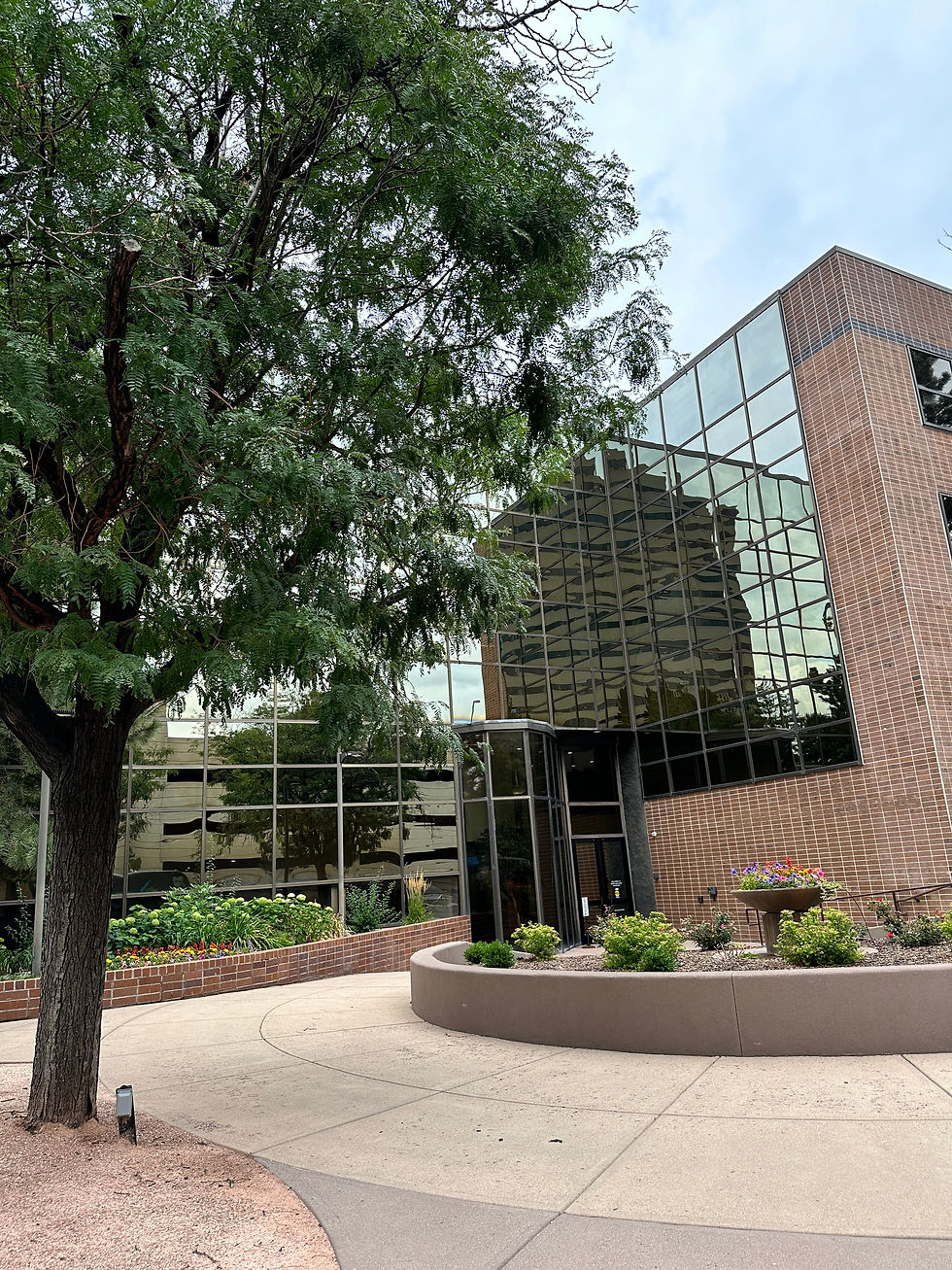
If you’re looking to lease office space in Denver, this submarket is pretty attractive right about now. Many landlords are getting deals done down here (or up here if you’re south). This market has changed more in the last three years than in the previous twenty. Vacancy is still relatively high, but demand is returning - thanks RTO, although the Denver area is reportedly the slowest RTO major market in the country. Rents for top buildings are rising (as are the NNNs on the newer buildings) while older buildings are selling and leasing at deeply discounted rates. Some office buildings are being torn down for apartments. A good Denver Tech Center office broker should be able to explain all of that in plain numbers.
Where the DTC is and why it matters
The Denver Technological Center dates to 1962, when it started on just 40 acres. Today it spans parts of Denver and Greenwood Village along the I-25 corridor, roughly between I-225 and Arapahoe Road. It is the metro area's largest suburban office concentration. It has direct highway access, several RTD light rail stations, and a restaurant and hotel base that most suburban business parks can't match.
Before diving into the details, it is helpful to look at why DTC is currently outperforming other areas like the CBD in Downtown Denver. Tenants are actively prioritizing total employee experience; DTC’s newer construction, robust amenities, and overall convenience make it a highly compelling location for companies focused on top-tier talent acquisition.
The DTC office market numbers at a glance (Mid-2026)
Metric | Current Figure |
Southeast submarket vacancy (CBRE, Q2 2026) | 26.4% |
Downtown Denver vacancy, for comparison | 38.6% |
Average direct asking rent, Southeast (full service) | $29.50/SF |
Class A / Class B asking rents | $33.92 / $24.20 per SF |
Q1 2026 net absorption, Southeast | +175,000 SF |
Sublease availability | 1.4 million SF (a four-year low) |
Quarters with no new office construction starts | 13 |
Why DTC vacancy numbers don't always agree (and the problem with “market data”).
You'll see very different vacancy figures quoted for the DTC, and it's worth knowing why. First of all, the data firms draw submarket boundaries differently and use different calculation methods.
CBRE's Southeast submarket: 26.4% vacant, as shown above.
CoStar data (via Denver South): about 19% vacant across the corridor from the DTC to Lone Tree, which works out to roughly 9 million square feet of empty space.
Metro-wide: the same gap appears. CBRE reports 28.7% vacancy, while CoStar-based data shows 18.3%.
Neither number is wrong. They measure different things. It’s always best to speak with a DTC broker who has years of experience in this realm to help analyze your unique situation.
Secondly, the recovery is real, but uneven
The office lease market trend line has turned.
Absorption is positive again. In Q1 2026, the Southeast submarket posted its second straight quarter of positive absorption, the first back-to-back gains since 2022. A year earlier it was losing 129,000 square feet a quarter, after six straight quarters that were flat or negative.
Sublease space is draining. It fell by 305,000 square feet in a single quarter as large blocks expired and converted to direct space.
Analysts are taking note. JLL's Q2 2026 report called Southeast Suburban one of the metro's strongest-performing areas.
The recovery isn't evenly shared. In Q1, Class A rents rose 2.8% quarter-over-quarter, while overall direct rents were still down 1.5% from a year earlier. That is flight-to-quality in one statistic. Tenants are paying up for renovated, amenity-rich buildings, and older Class B product is competing hard on price and concessions. Makes sense - if you want to attract talent these days, you need to offer the employee a bit more than a desk.
What office space costs in the Denver Tech Center
DTC asking rents currently run from the low $20s per square foot for older value-oriented space to more than $50 in the newest buildings. As of Q2 2026, CBRE's averages for the Southeast are $29.50 overall, $33.92 for Class A, and $24.20 for Class B.
The asking rate is only the starting point. Most DTC multi-tenant office space is quoted full service gross. Tenants should still read three things closely:
Base-year and expense-stop language. This determines how much of future operating-cost increases you pay.
The load factor. This is how rentable square feet are calculated from usable square feet under BOMA measurement standards.
The tenant improvement allowance. In this market, a stronger TI package or free rent can be worth more than a lower face rate.
Medical and specialty users are more likely to see modified gross or NNN structures, which shift even more cost responsibility to the tenant.
Some crazy sales example and a pricing reset for DTC office buildings
The most dramatic change is on the sales side.
Terrace at Orchard Station, 5575 DTC Parkway: sold in September 2026 for $5.75 million, about two-thirds below the $17.11 million its seller paid in 2020.
Prentice Point, 5299 DTC Boulevard: a 14-story, 216,500-square-foot tower that sold for $14 million, about $65 per square foot and 60% below its 2017 price.
Prentice Plaza: a 12-story Class A building that traded for $14.3 million, roughly $88 per square foot.
For sellers, these comps are painful. For buyers, especially owner-users, they create a rare opportunity. Buildings are trading well below what it would cost to build new.
Less office space is coming online
On the supply side:
No new construction. No new office projects have broken ground in the Southeast submarket for thirteen straight quarters, and none are expected soon given limited preleasing.
Inventory is shrinking. Metro-wide, Denver's office inventory declined in 2025 for the first time on record, falling by roughly 865,000 square feet as demolitions and conversions outpaced new buildings.
DTC conversions are underway:
Trammell Crow Residential has filed plans to demolish a six-story, 1997 built office building at 7601 E. Technology Way and build 660 apartments on the site.
Shea Properties is converting a vacant 124,000-square-foot office building at 4340 S. Monaco Street into 143 affordable apartments.
Every building that leaves the office inventory tightens the market for the ones that remain. Over time, that should favor well-located, well-maintained properties.
Who's leasing space in the DTC
Demand is broadening beyond traditional corporate users:
Aerospace: York Space Systems is assembling satellites in a formerly vacant building at 6060 S. Willow Drive.
Public and healthcare-related users: in 2025, Cherry Creek School District leased 56,000 square feet at Metropoint II, and Colorado Access leased 48,000 square feet at Regency Plaza.
Construction: Layton Construction recently moved into a larger office at Prentice Plaza, tied to its growing healthcare construction work in Colorado.
More demand in the pipeline: across metro Denver, active tenant requirements reached 6.5 million square feet at midyear, a 39% increase since January.
What this means for you
If you're a tenant, you still have leverage, but it is narrowing in the best buildings. Renewals are a good time to test the market. Landlords facing competition from sublease space and newly renovated buildings will often improve TI, free rent, or expansion rights to keep a good tenant. Start negotiations early. Twelve to eighteen months before expiration is not too soon for a larger requirement.
If you're a buyer or owner-user, DTC pricing hasn't looked like this in decades. Medical, dental, and other professional practices that have always leased can now evaluate ownership seriously. Owning locks in occupancy costs, builds equity, and can fit a 1031 exchange strategy. Before you buy, confirm three things:
The property zoning permits your use.
The building's plumbing, HVAC, and electrical systems can support your build-out.
The parking ratio meets your patient or client volume.
If you're a landlord or seller, the market is rewarding capital improvement and punishing deferred maintenance. Pricing, marketing, and repositioning decisions need to be based on current comparable sales.
What to Look for in a Denver Tech Center Office Broker
The right DTC office broker should bring five things:
Current data, not generalities. Ask for building-level vacancy, recent lease comps, and recent sale comps.
Representation of your interests only. Tenant and buyer representation should be free of the conflicts that come with representing the landlord on the same deal.
Lease and contract fluency. Expense provisions, assignment and sublease rights, relocation clauses, and personal guarantees carry real long-term cost.
Underwriting ability. Buyers and investors need someone who can evaluate NNN structures, rent rolls, and conversion feasibility.
Specialty experience if you're a medical, dental, or other specialized user.
At Colorado Real Estate Brokers Inc, we bring more than 25 years of commercial real estate experience to DTC transactions. That background includes NNN lease structures, commercial underwriting, Tenant and Landlord representation. We represent tenants, buyers, landlords, and sellers across the Denver and Boulder Front Range office market.
Frequently Asked Questions
What is the office vacancy rate in the Denver Tech Center?It depends on the source and boundary. CBRE's Southeast submarket measured 26.4% in Q2 2026, while CoStar data puts the DTC-to-Lone Tree corridor at about 19%. Both have been trending down.
How much does office space cost in the DTC?CBRE's Q2 2026 average direct asking rent for the Southeast was $29.50 per square foot per year, full service. Class A averaged $33.92 and Class B $24.20.
Is it a good time to buy an office building in the Denver Tech Center?Pricing is well below replacement cost, with recent sales ranging from about $65 to $88 per square foot. That makes this time a strong window for owner-users and value investors, but building condition and use suitability matter more than ever.
Do I need a broker to lease office space in the DTC?You don't have to use one, but tenant representation typically costs the tenant nothing directly, since landlords customarily pay the commission. A broker working only for you can advise about off-market options, benchmark concessions, and flag costly lease terms.
Are DTC office buildings being converted to apartments?Yes. Active examples include a planned 660-unit project at 7601 E. Technology Way and a 143-unit affordable conversion at 4340 S. Monaco Street.
Looking for office space, an owner-user building, or advice on a DTC property? Contact us


Comments